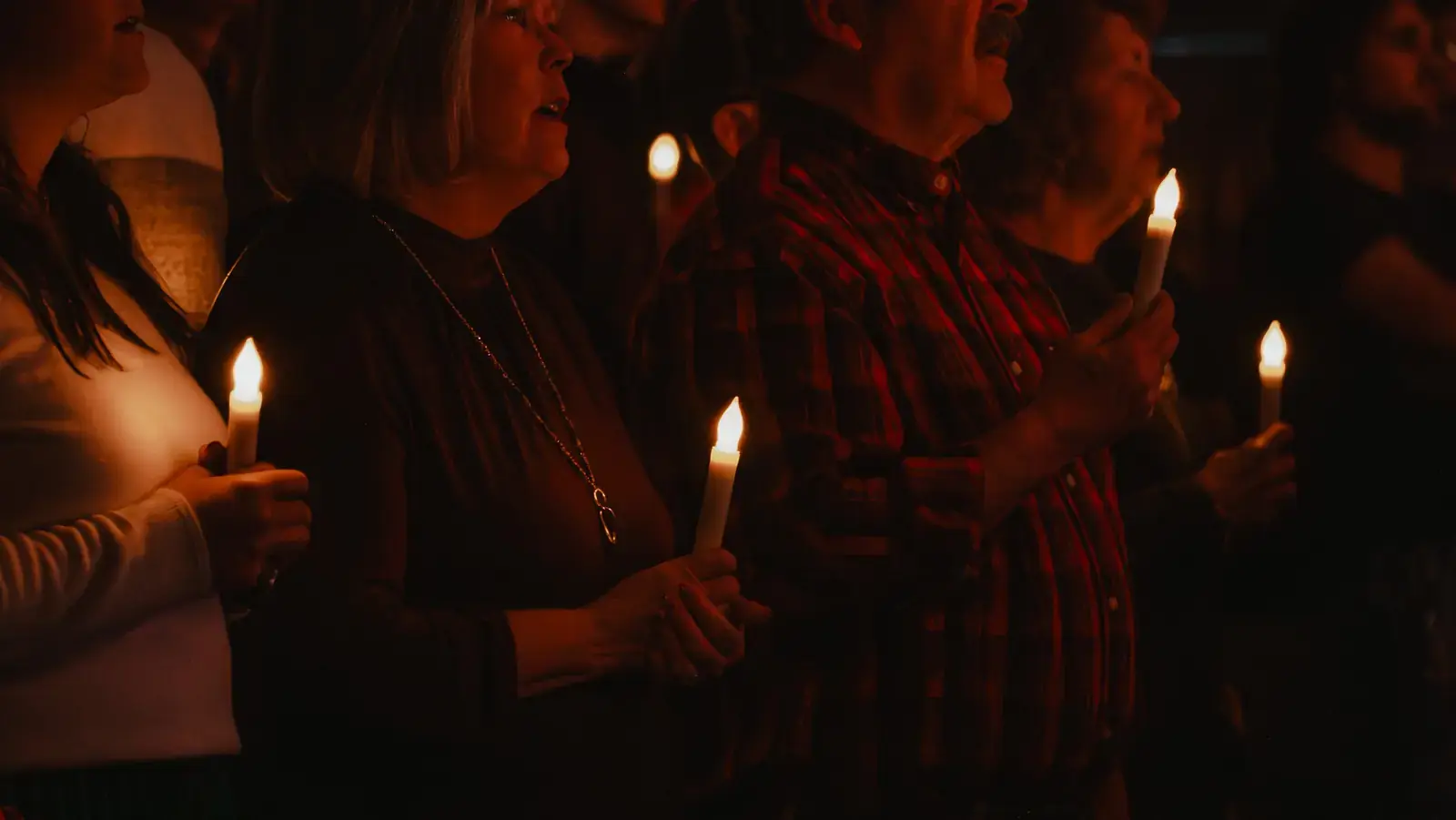
The question “what is a Christian church?” can mean two different things. Sometimes people are asking in the broad sense: what makes any church Christian? But sometimes they’ve driven past a building with “Christian Church” on the sign, or they’ve been invited to one, and they want to know if that name means something specific. It does. “Christian Church” is the name of a particular family of churches with a particular history, and many people around Indianapolis have never heard it explained.
One distinctive emphasis you’ll encounter in churches with Restoration Movement roots is a desire for the unity of Christians around Jesus and the teaching of the New Testament. That aspiration has a biblical home in John 17, where Jesus prays for His followers to be one. Living that out takes humility, particularly when Christians disagree.
I pastor one of those churches, Ben Davis Christian Church, so I’ll try to answer both questions honestly. I’ll also explain how our churches relate to two close cousins you may have heard of, the Churches of Christ and the Disciples of Christ, and I want to be fair to all of them.
Any church that follows Jesus as Lord is a Christian church.
In the widest sense, a Christian church is a group of people who believe Jesus is the Son of God, trust that He died for our sins and rose from the dead, and gather to worship Him and follow His teaching. That includes Catholic, Orthodox, and Protestant churches, big and small, old and new. The name “Christian” goes all the way back to the first century:
“(It was at Antioch that the believers were first called Christians.)”
Acts 11:26 (NLT)
So when a church calls itself “Christian,” it’s using the oldest name Jesus’ followers ever had. And that’s exactly why one group of churches chose it on purpose.
These churches began with a hope that Christians could stop dividing.
In the early 1800s, American Christians were split into a lot of competing groups, and on the frontier those lines could get bitter. A few Presbyterian ministers started asking whether Christians could set aside the labels and creeds that divided them and simply go back to the Bible.
One of them was Barton W. Stone in Kentucky. In 1801 he helped lead the huge Cane Ridge revival, a camp meeting that drew people from Baptist, Methodist, and Presbyterian churches. A few years later, in 1804, Stone and a group of fellow ministers dissolved their own presbytery with a document they called the “Last Will and Testament of the Springfield Presbytery.” They wanted to blend in with the whole body of Christ instead of standing apart as one more group.
Around the same time, Thomas Campbell and his son Alexander were working toward the same goal in western Pennsylvania and what’s now West Virginia. In 1809 Thomas Campbell published the “Declaration and Address,” which called Christians to unite around what the Bible clearly teaches. The Stone and Campbell groups found they shared the same hope, and after meeting in Lexington, Kentucky, they joined together at the start of 1832.
Historians call this the Restoration Movement, or the Stone-Campbell Movement, because its goal was to restore the church to what we see in the New Testament. People in the movement wanted to be called Christians and nothing else, and they also believed there were faithful Christians in many other churches. A motto often used among them puts it well: “In essentials, unity; in opinions, liberty; in all things love.”
Christian Churches share a few clear practices.
Today the independent churches in this family are often called Christian Churches and Churches of Christ, and many have “Christian Church” in their names. As of 2020 there were close to 4,800 of these congregations in the United States. They have some things in common that you’ll notice if you visit.
Each congregation is independent. No headquarters or bishop owns the building or assigns the pastor, so the local church makes its own decisions and answers to God.
Baptism is by immersion. The New Testament describes baptism as being buried with Christ and raised to new life (Romans 6:3-4), so these churches lower people who have chosen to follow Jesus completely under the water. It’s taught as part of how a person responds to the good news about Jesus.
Communion happens every Sunday. In Acts, the early believers met on the first day of the week to break bread together (Acts 20:7), so these churches share the Lord’s Supper each Sunday as a way to remember Jesus’ death and celebrate that He’s alive.
Leadership rests with a team of elders. Following the pattern in the New Testament letters, these spiritually mature believers watch over and care for the church, alongside the ministers and other leaders.
The movement grew into three branches.
A movement built on unity sadly ended up dividing too, and I want to describe that fairly, because the people on every side loved Jesus and wanted to obey the Bible.
The first split came over two questions in the 1800s: whether churches could form missionary societies, and whether instruments belonged in worship. Some churches believed that since the New Testament doesn’t mention either one, adding them went beyond what Scripture authorizes. Those congregations were listed on their own as Churches of Christ in the 1906 federal census of religious bodies. Today the Churches of Christ still sing without instruments, a cappella, and they hold that conviction sincerely. Their singing is often beautiful.
The second split came more slowly in the 1900s. Many congregations, known as the Disciples of Christ, became more involved in working with other denominations and grew more open on some theological questions and on membership practices. In 1968 they reorganized as a denomination, the Christian Church (Disciples of Christ). Congregations that wanted to stay fully independent and more conservative in their teaching kept going on their own, and by 1971 they were listed separately as the Christian Churches and Churches of Christ.
Ben Davis Christian Church comes from that independent stream. We sing with instruments, we aren’t part of a denomination, and we still hold to the same hope Stone and the Campbells had: that Christians could be one around Jesus and His Word. We share a family history with both of our cousin groups, and I’m grateful for the faithful people in each.
Jesus is the reason any of this matters.
The founders of the movement wanted people to meet the Jesus of the New Testament and respond to Him the way people did in the book of Acts. That’s still the point. When the crowd in Jerusalem asked Peter what they should do, he told them to turn from their sins, turn to God, and be baptized in the name of Jesus for the forgiveness of their sins, and he promised they’d receive the Holy Spirit (Acts 2:38).
That invitation is for you too. All of us have sinned and drifted from God. Jesus died on the cross to take the penalty for those sins, and He rose from the dead so we could have new life with Him. If you admit your sin, believe that Jesus died and rose for you, and choose to follow Him, God forgives you completely. Baptism is the first step, and we’d count it a joy to talk with you about it.
Come see what a Christian church looks like up close at Ben Davis Christian Church, 701 S. High School Rd in Indianapolis, near Avon and Speedway. We worship Sundays at 9:30 and 11 am, we take communion together every week, and we’d love to have you join us as we reach the whole city. Spanish translation is available every Sunday, Kids (birth–3rd grade) and a preteen worship service (4th–6th grade) meet at both services, and you’ll find guest parking near the main entrance and coffee in the café. You can reach us at (317) 241-3944 or info@bdcc.org.
God loves you.
Sources
- Christian churches and churches of Christ (Wikipedia)
- Christian History Timeline: From Stone and Campbell to the Great Communion (Christian History Institute)
- Church of Christ (Encyclopaedia Britannica)